Member End Protection Without Wood Packing
The ends of a member are protected with rigid foam, not timber. Wood in an export pack has to be able to show a fumigation certificate, and building that step into every shipment costs more programme time than the protection is worth.
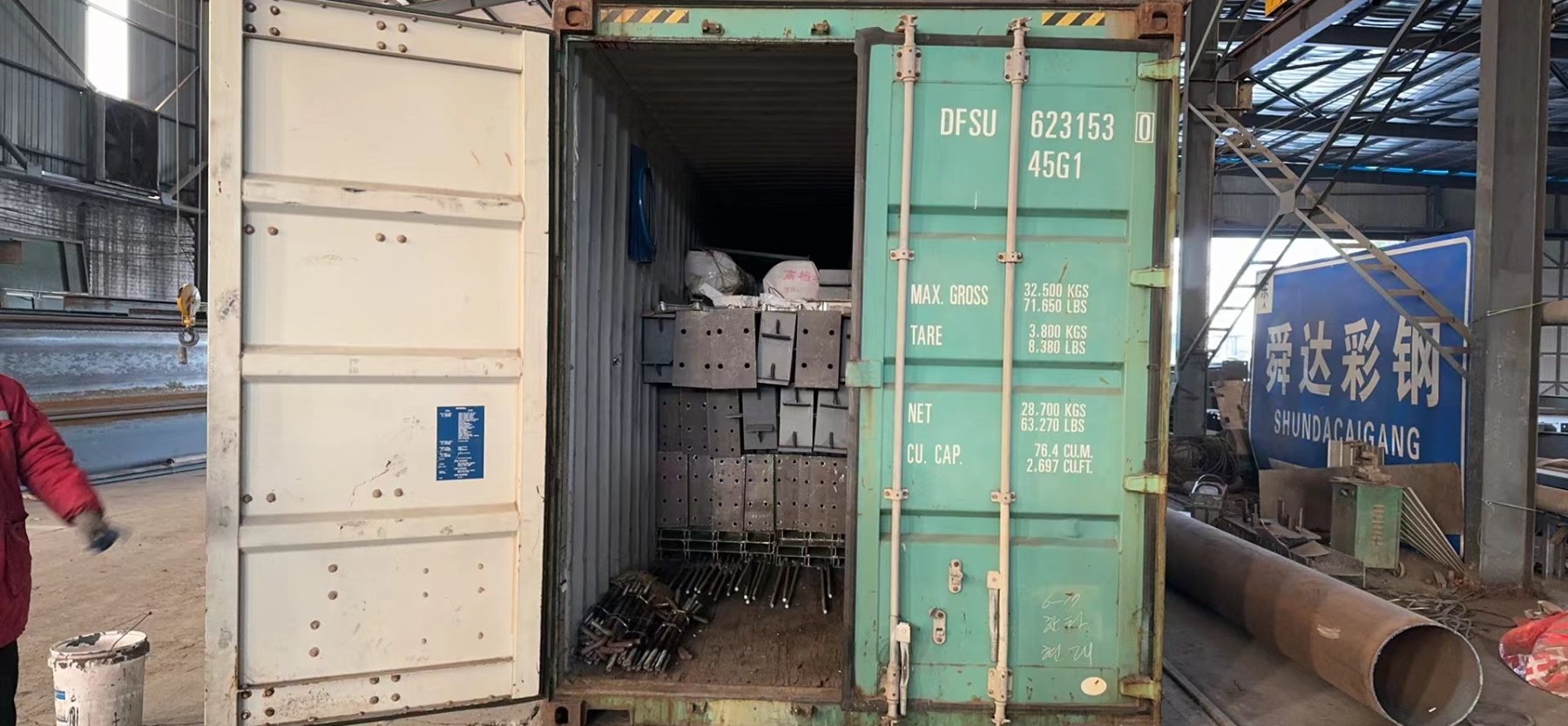
The packing material is a customs question before it is a workshop one
Inside the workshop, a timber offcut is the cheapest spacer available. It is also the wrong choice for anything that leaves the country, and the reason is not structural. It is sequence.
Why a timber block becomes paperwork
Timber in an export consignment stops being an offcut and becomes a plant product, and a plant product travels with a question attached: has it been treated, and who says so. Our position is simple to state. If the pack contains timber, the pack has to be able to show a fumigation certificate.
That is not an unreasonable requirement, and it is not something to argue with at a port. It is simply a step that either exists in your programme or does not, and on our shipments we have found it cheaper to design the step out than to manage it. There is also a practical point underneath: the certificate covers the timber, not the member. It does nothing for the base plate, the bolt holes, or the painted end that the timber was there to protect.
What the fumigation route adds to the programme
A fumigation certificate is a document with a treatment, a date, and somebody who signs for it. To produce one, the timber has to be handled as a batch before it is closed into the container. That sounds small. In practice it puts a second material with its own lead time into the last week of the programme, which is exactly where the schedule has no slack left.
Two consequences follow. The packing cannot be finished whenever the members are finished, because it is waiting on a treatment and a document. And the treatment happens at the end, after the members are already fabricated and painted, so a hold there does not delay one operation. It holds a finished building. Fumigation is a legitimate route and plenty of shipments use it. It is the wrong route for a steel building, where the packing material is a small accessory and the schedule behind it is a large commitment.
What we use instead
Hard rigid foam. It is not a plant product, so it carries no treatment step and no certificate behind it. It arrives as sheet or block and is sized for the ends it protects; how thick and how it is held are set in the packing plan for each member type. Because it is inert and uniform, it also behaves the same way on the fifth bundle as on the first, which a sawn offcut does not.
Where a member is damaged before it is ever loaded
Very little goes wrong in the sea passage. The damage happens between the paint bay and the container door: bundles stacked on each other, an end pressed into a corner post, a sling point chosen for speed. None of it is dramatic, and all of it is discovered by the person who has to bolt the member up.
Base plates and their bolt holes
A base plate is a flat plate on the end of the heaviest member in the bundle, and it is the first thing to meet the floor, the bundle below it, and the container wall. It is also the part that has to sit flat on the foundation later. A plate that has been bent at one corner still bolts down, but it no longer seats, and the gap it leaves is a conversation about shims on a day when nobody has shims.
The bolt holes matter for the same reason in a smaller register. A hole with a burr on the edge still passes a bolt, and the burr is what makes the fit tight, then oval, then disputed. Foam over the plate covers both problems at once.
The cut ends of rafters and columns
An end is where a coating is thinnest and where it is least able to heal itself. Foam on the end is not there to make the member pretty in the container. It is there so that the first metre of a rafter survives contact with a sling, a fork pocket, or the bundle it was stacked against.
The faces that meet lashing and container doors
Inside a container, a member is pressed against steel and against other members, not against air. Every one of those contact points is a place where a painted surface is asked to absorb a load it was never designed for. Foam at the contact point is the cheapest way to move that load off the coating and onto something disposable.
What rigid foam does, and what it cannot do
It spreads a point load over an area
Foam works by being softer than the thing it protects and stiffer than nothing. A sling, a forklift tine, or the corner of the member above all arrive as a point. A block of foam turns that point into an area, and the coating underneath survives a load it would otherwise have taken on a few square centimetres.
It does not replace lashing or blocking
This is where packing specifications go wrong. Foam protects a surface; it does not restrain a mass. A bundle still has to be blocked so that it cannot move against the container, and the lashing is still what carries the load in a turn or a swell. Foam laid over a bundle that is not restrained is a coating that arrives intact in a pile that has moved.
It does not survive a dropped bundle
Nothing in a pack list does. If a bundle is dropped from a height, the energy goes into the steel, and the member bends whether or not there is foam on the end. What foam buys you is the ordinary handling of a normal shipment, which is where almost all the damage actually occurs. Reading it as insurance against a crane failure is how people end up disappointed in a material that did its job.
The three things the packing plan still has to decide
Three questions are not answered by choosing foam. They are answered per member, and they are the difference between protection and the appearance of it.
How thick, and how dense
There is no default worth publishing. Thickness and density are set against the weight of the member, the shape of the end, and how much will sit above it in the stack. A base plate carrying three tonnes of rafters and a thin bracing cleat are not the same problem, and one specification applied to both either wastes material or protects nothing. The values live in the packing plan for each member type.
How the piece stays on the member
Foam that falls off before the container is closed protects nothing at the destination. How the piece is held against the end belongs to the packing plan as well, because it depends on the shape of the member and on the surfaces available to hold against. It is decided with the member in hand, not ordered as a generic accessory.
When it comes off
At site, before the lift, not after. Foam left on a base plate while the member is set down is foam compressed into the grout line. The packing plan says where it is removed and who removes it, because the answer is different for a column base and a rafter end.
What the site should see when the doors open
The order the bundles come out
Packing sequence is erection sequence, and the ends are part of that logic. The bundle that is needed first should be the bundle that comes out first, with its protected ends facing the door. A container loaded for density rather than sequence turns the first morning on site into a sorting exercise, and sorting is when ends get damaged.
What to record before the wrapping comes off
Photograph the bundles as they sit, before anything is unwrapped, and count them against the packing list. This takes minutes and it is the only moment when the evidence is still where the damage happened. A dent photographed at the laydown area on day one is a claim. The same dent photographed after the member has been dragged across the site is an argument.
What to do with an end that is already dented
Set it aside and record it rather than fitting it and hoping. A bent base plate can usually be brought back, but the decision belongs to whoever is responsible for the connection, and it should be taken before the member is lifted into place. Once the column is standing, the same repair costs a crane and a crew.
What we need from you before the pack is closed
The short list
Packing decisions need the member list, not the whole design. The building type and use, the span, length and eave height in metres and feet, the column spacing, whether there is a crane and of what capacity, the port of discharge, and who erects the steel. With those, the packing plan can be built and the ends can be protected against the right member.
What can wait for the drawing set
Foam specification, fixing method, and bundle arrangement are outputs of the packing plan, and the packing plan follows the member list. They cannot be settled at the enquiry stage and they do not need to be. Our quality management system is ISO 9001 certified, and packing and protection fall inside it, which is why these three questions are answered in writing rather than at the loading bay.
Where to read next
Send the member list and we will answer with what the packing plan needs