Importing Steel Buildings: Who Clears Customs
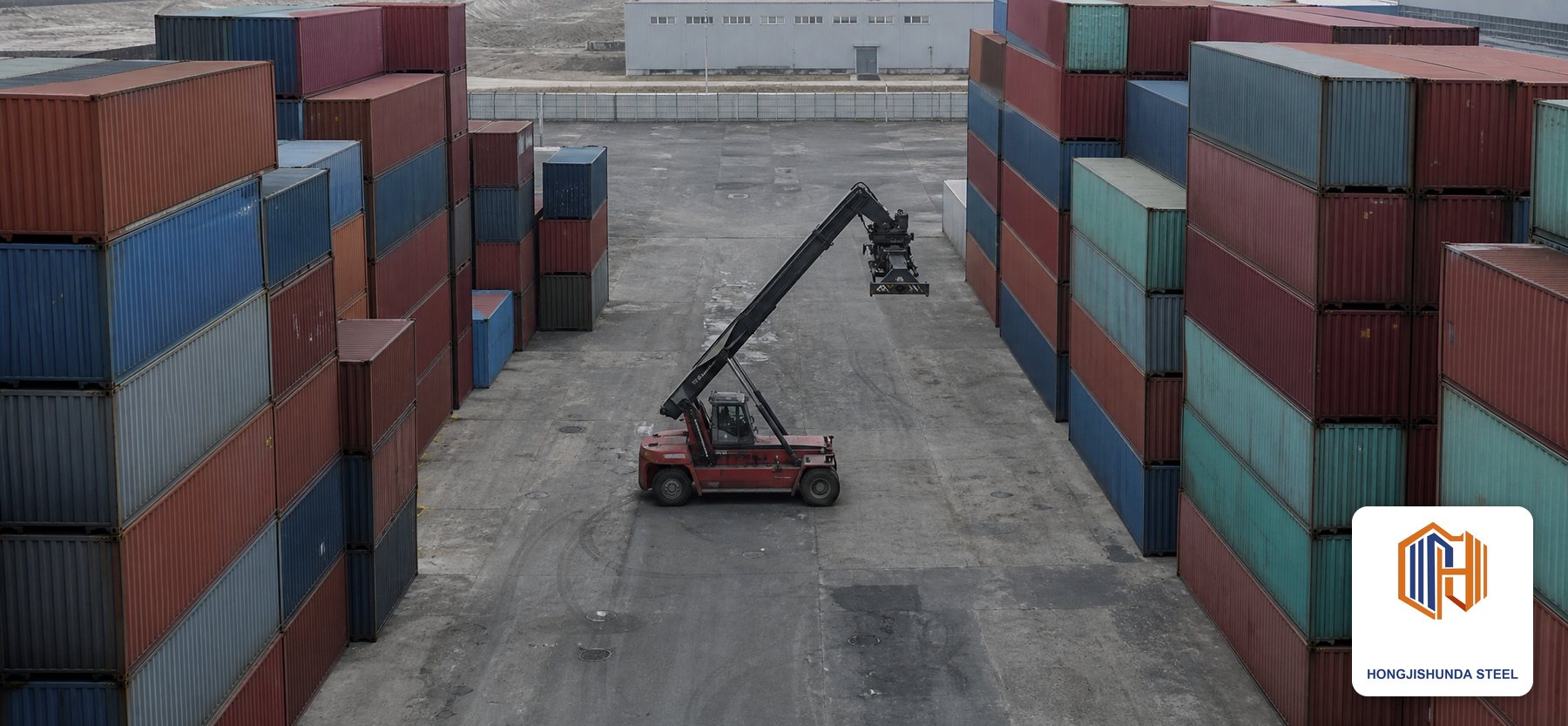
Steel buildings are unusually awkward cargo at a border. They are not a machine with a model number, they are not a raw material with a single tariff line, and they arrive as a set of parts whose classification depends on how the set is described. That description is written by an exporter, read by a broker, and accepted or challenged by an officer who has never seen a portal frame. Everything that goes wrong here is a document problem rather than a steel problem.
This note is about the decisions that have to be made before the vessel sails. Once the containers are on the water, none of them can be changed, and the cost of having got them wrong is measured in days.
The importer of record is the only question that matters
Every shipment has exactly one importer of record: the party legally responsible for the entry, the duty, and the accuracy of the declaration. That party is not always the buyer, and it is not always obvious, because it is set by the delivery term and by who is entitled to clear the goods in the destination country.
Two ways a buyer ends up as importer without noticing
The first is a delivery term that places the goods in the buyer's control at the port of discharge, which makes the buyer the importer from that moment. The second is a supplier who offers to arrange clearance as a favour, using a broker engaged in the buyer's name, which leaves the legal responsibility with the buyer while the practical control sits with the supplier. Both are common, and neither is visible in a price.
Why the supplier usually cannot clear the goods
In most destination countries, clearing an import requires a local tax identity, a registered broker and a bank able to pay the duty. A Chinese fabricator does not have these and cannot obtain them for a single shipment. When a supplier offers a delivered price to site, they are either using a forwarder who takes on the role, or they are absorbing a risk they cannot actually manage. Ask which, and ask for the name of the entity that will appear on the entry.
The documents the port will ask for
The document set for a steel building shipment is standard and short. What varies is whether it is consistent, because inconsistency is what turns a routine entry into an examination, and an examination is what turns a week into a month.
The commercial invoice and the packing list have to agree
These two documents describe the same cargo in two different ways: value and contents. Every line on the packing list should be traceable to the invoice and every invoice line should be traceable to the packing list. When they disagree, and they frequently do because one was updated and the other was not, the officer has to resolve the difference, and resolution takes time the buyer is paying for.
Origin, and why the certificate is not a formality
The certificate of origin determines the duty rate in most of the markets we ship to, and it has to match the invoice on value, description and quantity. A certificate issued for a different quantity, or issued after the goods sailed, is a certificate that may not be accepted. Ask when it is issued and check the quantities against the invoice before the vessel departs.
How the set is described on the entry
A steel building can be described as components, as a structure, or as a kit, and those descriptions do not carry the same tariff treatment in every country. The description is proposed by the broker and it should be agreed with the buyer before the first entry, not corrected after it. Ask to see the proposed description in writing and check that it matches what the drawings show.
Where the money starts accruing
Import cost is usually modelled as duty plus freight, and both of those are predictable. The costs that are not modelled are the ones that accrue with time, and on a first shipment they are the ones that do the damage.
Free time, and what the clock is really measuring
Free time at the terminal is a fixed number of days measured from discharge. It is not measured from when the buyer is ready, and it does not pause because a document is missing. Ask for the free period in days, the daily charge afterwards, and the terminal it applies to. Then compare it with the realistic clearance time for a first import in that country, which is longer than the supplier will assume.
The cost that does not appear on any invoice
Delay also costs storage, re-handling, lost erection days and idle equipment, and none of these arrive as a line item from the port. They appear later, distributed across the project, and they are never attributed to the clearance problem that caused them. Estimate the daily cost of an idle erection crew and compare it to the cost of engaging a broker early. The comparison is usually decisive.
Freight terms, and what each one changes
The three terms that appear on most steel building quotations differ in exactly one respect: where the supplier's responsibility stops. Understanding that single difference is enough to choose between them without memorising the rule set.
Where responsibility stops in each case
An ex-works term stops responsibility at the factory gate, which makes the buyer responsible for everything from loading onwards. A free-on-board term stops it when the goods are on the vessel, which is the most common choice for a first order because both parties can verify the handover at a single point. A cost-and-freight term stops it at the destination port but does not include the risk in transit. Each is a different allocation, and none of them is inherently better.
The term that quietly includes insurance, and the one that does not
Two terms look almost identical in name and differ on where risk passes. In one, risk passes at the origin port and the buyer needs their own marine cover from that moment. In the other, risk passes at destination. On a steel shipment the difference matters, because damage in transit is common and the argument about who owns it is settled by which of the two was written. Ask which term is quoted and whether marine insurance is included.
What to settle before the vessel sails
Four decisions can be made before loading and cannot be made afterwards. All four are cheap now and expensive later, which is why they belong at the top of the pre-shipment checklist rather than in the contract's small print.
Name the broker, the term and the port
Name the broker in the destination country and confirm they have cleared steel structures before, because a broker who has only handled containerised consumer goods will read the entry differently. Name the delivery term and the exact place it refers to, since a term without a place allocates nothing. Name the port of discharge and the terminal, because free time and storage charges are set per terminal rather than per port. Three names, agreed in writing before loading, remove most of the uncertainty from the arrival week and give every later conversation a subject.
Agree the tariff description on the first shipment
Ask the broker for the tariff description they intend to use and confirm it before the first entry. Once a description has been accepted for a shipment, later shipments of the same goods become routine, because the classification is on record. Getting it right once is worth more than getting it cheap once.
Written by Johnny, who ships these buildings and answers the document questions that arrive after the containers do. If you are importing for the first time, send me your delivery term and destination port and I will tell you who is the importer of record under it.
Related: who does what between factory and site · packing list and container list · what a 40-foot open top carries · choosing a supplier