How to Compare Two Steel Structure Quotes
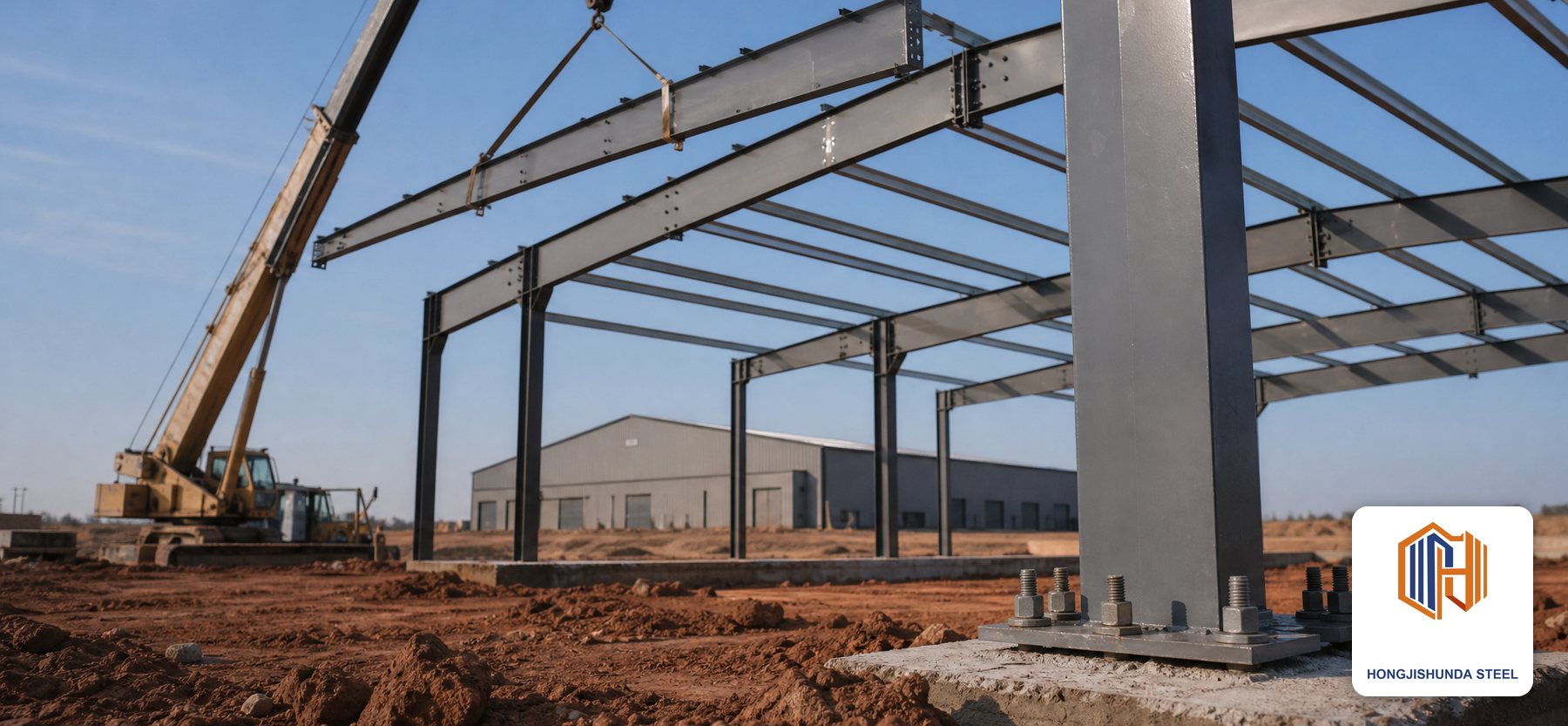
The most expensive mistake I see in this trade is not a high price. It is a low one, chosen because it was low, for a scope that was never written down. The buyer awards, the steel arrives, and somewhere in the first week on site a line appears that was never in either quotation: the anchor bolts, the gutters, the insulation, the erection. The gap between the two quotes turns out to be smaller than the gap between the chosen quote and the finished building.
This note is the comparison procedure I would use if I were the buyer. It is deliberately about structure rather than numbers, because the numbers change with the market and the structure does not.
Why two prices cannot be compared as prices
A price is a single figure attached to an undefined object. Two figures attached to two undefined objects carry no information about which is cheaper, because cheapness is a relationship between a figure and a scope, and neither scope is present. This is not a technicality. It is the reason the same building can be quoted at two very different totals and both quotations can be honest, and it is the reason a buyer who compares totals is comparing noise.
The number arrives without a scope
Ask ten suppliers for a price on the same drawing and you will receive ten totals built on ten different assumptions. One includes the purlins and one does not. One prices the envelope and one prices the frame only. One is quoting a delivered price to a named port and one is quoting an ex-works price, which is a different commercial object entirely. None of these differences is dishonest and none of them is visible in the total, because the total is the only thing most buyers read.
The three lines that move most
Three lines account for most of the spread between two quotations on the same building. The weight basis, which decides whether the two frames are even the same frame. The exclusion set, which decides how much of the building is still to be bought. And the envelope, which decides whether cladding, insulation and openings are inside the figure or outside it. When two quotes differ substantially, the difference is almost always traceable to one of those three, and never to the supplier's margin.
What has to be inside the quotation
A quotation is a scope document that happens to carry a number. Judged that way, most quotations are incomplete documents, and the incompleteness is not an accident of format. It is what allows a favourable number to exist. Two items have to be present before a quote can be compared with anything.
The weight basis, and why it comes first
The weight basis states what the tonnage figure counts: primary frame only, or frame plus purlins and bracing, or the full steel content including connection plates. Two quotations for the same building can differ substantially in tonnage without either being wrong, because they are counting different things. Without the basis stated, the tonnage is unreadable and the comparison has no floor to stand on. Ask for it in writing, on the quotation, before you read the total.
Exclusions written on the quotation, not in a phone call
Every supplier has exclusions and every supplier will state them if asked. The problem is that they are usually stated in a conversation, and a conversation does not survive the handover to a procurement file. Require the exclusion list to appear on the quotation itself, as a list, in the same document as the number. A supplier who resists this is telling you something useful about how the rest of the project will be documented.
The exclusions that decide the outcome
Some exclusions are minor and some change the size of the project. The ones that matter are not the specialist items, because those are obvious and get budgeted. The ones that matter are the ordinary items that everybody assumes somebody else is buying.
Foundation, erection and freight
These three are the largest and the most frequently left outside a steel quotation. The foundation is usually a local scope, which is fine, but the anchor bolts and the setting-out information are the interface and someone has to own them explicitly. Erection is a separate trade and is rarely inside a supply quotation. Freight depends on the delivery term, and the delivery term is frequently stated in three letters that the buyer does not unpick. Establish who owns each of the three before comparing, not after.
Doors, windows, insulation and gutters
The second tier of exclusions is the one that produces the unpleasant surprises, because each item is small enough to be forgotten and large enough to matter once several are added. Roller doors, personnel doors, windows, roof lights, insulation, gutters, downpipes and flashings are all envelope items and all routinely sit outside a frame quotation. Collect them into one list and ask both suppliers to state, for each line, whether it is in or out. The exercise takes twenty minutes and closes the gap that would otherwise appear on site.
How to normalise the two
Normalising is mechanical. It is not a negotiation and it does not require technical judgement, which is why it is worth doing before anyone with technical judgement spends time on the comparison. The output is one table with two columns, and the table is what the decision is actually made from.
One scope table, two columns
Build a single table with every scope line down the side and the two suppliers across the top. Fill each cell with in, out, or a stated quantity. Where a supplier has not answered, the cell stays empty and the quote is marked incomplete rather than assumed. The completed table converts a comparison of totals into a comparison of scope, and it usually shows that the two offers differ in six or eight places rather than in one.
Recalculate at a single weight basis
Once both have stated their basis, restate both tonnages at one basis. This often requires a small amount of arithmetic and occasionally requires asking a supplier to convert their figure. The point is not precision. The point is to find out whether the two frames are within a normal margin of each other, or whether one of them is materially lighter. A materially lighter frame is the single most common reason a quotation comes in lower than its competitors.
What to do when they are still far apart
After normalisation, most gaps close or become explicable. When they do not, the remaining difference is almost always structural rather than commercial, and the right response is to ask for the information that exposes it rather than to ask for a discount.
Ask for the section list
The section list names the member sizes used for each part of the frame. Request it for both offers and compare them line by line. Two frames that look identical in a rendering can differ substantially in the depth and thickness of the rafters and columns, and the section list is where that difference stops being invisible. A supplier who will not release the section list before an order is a supplier whose frame you cannot evaluate.
The three questions that reveal a light frame
Ask for the design wind speed used, in km/h, with the source stated. Ask for the design life the frame was sized for. Ask what the frame was checked to carry besides roof and wind. A light frame reveals itself in the answers, because it is usually light in one of three specific ways: a wind speed taken from a milder location, a design life shorter than the building is expected to serve, or a load case that ignores something the client intends to add. None of those three shows up in a total.
Written by Johnny, who quotes steel buildings for buyers in Africa and South America and who has sat on both sides of this comparison. If you have two quotations in front of you, send me both scope lists and I will tell you where they differ.
Related: what drives the cost · when the bill of quantities and the drawings disagree · what is in a shop drawing set · how to write a building brief