When Delivered Steel Disagrees With the Drawing
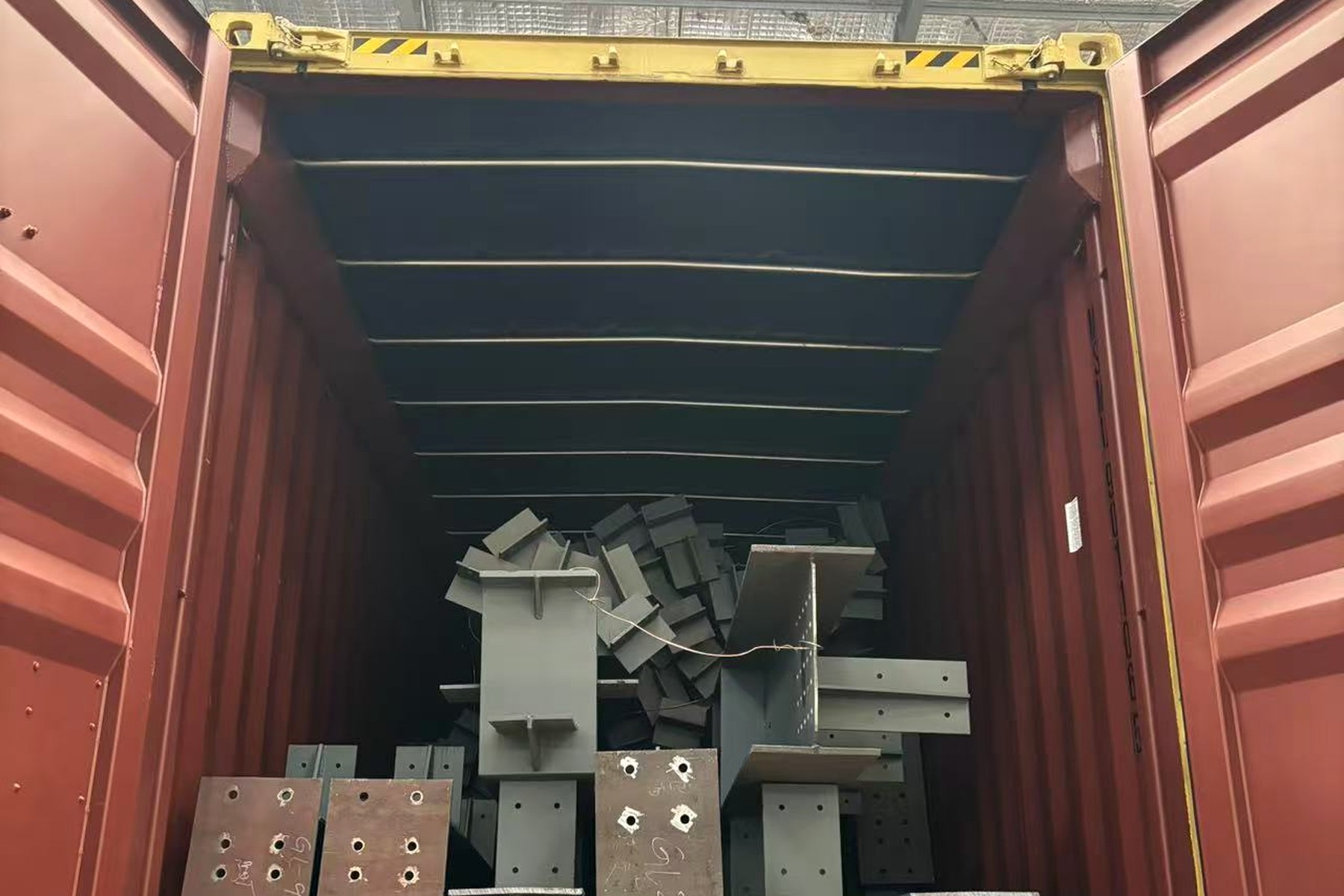
Every fabricator makes mistakes. The plants that ship good buildings are not the ones with no errors; they are the ones whose errors are found early, described precisely and closed quickly. That is a property of the buyer's response as much as the supplier's, because the information needed to fix a member exists only in the first few hours after it is unpacked, and after that it has to be reconstructed from memory.
This note is the sequence to follow on the day it happens. It assumes the reader is on site, holding a drawing, looking at something that does not match it.
The first hour decides the cost
Three things happen in the first hour that cannot be undone. Someone decides whether the member can be made to fit. Someone decides whether to keep unloading. And someone decides who to tell. Each of those decisions is usually made by whoever is closest, with the least information, and each of them determines the shape of the problem for the following month.
Why nobody should touch it yet
The instinct on site is to try the fit, and the instinct is expensive. Cutting, grinding, re-drilling or forcing a member converts a supplier error into a joint error, which gives the supplier a legitimate position: the part was altered before it was reported. Prime the record, not the steel. A member that has been modified can no longer be measured as delivered, and the measurement is the entire case.
Tell the factory before telling the site manager
The factory needs the same day the site does, because the fastest fix is usually a replacement fabricated in parallel with the investigation. If the first message goes up the site chain instead of to the plant, it arrives at the plant days later, translated into a complaint rather than a measurement. Send the photographs and the dimension to the plant first, then brief upward with the same material.
What to record before anything moves
The record is five items and it takes about twenty minutes. Done properly, it ends the argument before it starts, because it removes every question the factory would otherwise have to ask.
Photographs with a scale in frame
Photograph the member in place, with a tape or a rule visible against the dimension in question, and include the mark in the same frame. Three photographs are usually enough: the whole member, the mark, and the specific dimension with the tape. A photograph without a scale cannot be measured and a photograph without the mark cannot be identified, and a set missing either one will generate a round of email that costs a day.
The dimension as drawn, the dimension as delivered
State both numbers in the message, not just the difference. The drawn dimension comes from the shop drawing and the delivered dimension comes from the tape, and both should be written with the tolerance the drawing allows. A member that is outside tolerance is a defect; a member that is inside tolerance but does not fit is a different problem, and it is usually a problem with the interface rather than with the member.
The mark, and whether it is the right member in the right place
Check the mark before checking the dimension. The most common cause of a member that does not fit is not a fabrication error but a member delivered to the wrong position, or a mark read upside down by the erector. Confirm the mark against the erection drawing and confirm the drawing revision matches the revision the factory used. A substantial share of reported discrepancies close at this step without the factory being involved at all.
Sorting the three kinds of disagreement
Not every mismatch is a defect, and treating them all the same way wastes the leverage that a real defect deserves. Three categories cover almost everything, and the category determines the response.
Wrong member, right drawing
The member does not match the drawing it was made from. This is a fabrication or dispatch error and the remedy is a replacement or a repair, at the supplier's cost. The evidence required is the photograph, the two dimensions and the mark. Nothing else is needed, and the request can be made on the same day. Ask for the replacement to be fabricated against the same drawing revision, and ask for the mark to be repeated exactly, because a replacement that arrives with a different mark creates a second discrepancy in the same position.
Right member, wrong drawing
The member matches the drawing, and the drawing is wrong for the building. This is a design or coordination error and the remedy is a decision rather than a replacement, because the correct member may be the one that has arrived. The evidence required is the drawing revision, the date it was issued and the point at which the site condition was known. This category is the one most often misdiagnosed as a supplier fault.
Right member, wrong interface
The member is correct and the thing it connects to is not: a base plate cast at the wrong centres, a slab out of level, an adjacent member already erected in the wrong position. This is a site condition and the remedy is usually a modification, which should be authorised deliberately and recorded, since an unauthorised modification becomes the supplier's defence later.
Writing a request that can be closed
A request to a factory is not a complaint. It is an instruction with an expected output, and the difference in how it is written determines whether it produces a replacement or a correspondence.
One member per message
Report one member per message, with the mark in the subject line. A list of nine discrepancies in one email produces one reply that addresses two of them, because the person answering is working from a list they did not make. Nine messages produce nine answers, and nine answers can be tracked to closure. Bulk reporting is faster to write and slower to resolve.
Ask for a decision, not an explanation
End the message with a question that has a small number of answers: replace, repair on site with your instruction, or accept as is. An open question invites an explanation, and an explanation is not a fix. A closed question produces a decision, and a decision can be scheduled against the erection programme the same day it arrives. Add the date the answer is needed by, and add it as a date rather than as a request for urgency, since urgency cannot be scheduled against and a date can.
When to stop and when to proceed
Erection cannot always wait. The judgement is which parts of the programme can continue while the discrepancy is resolved, and that judgement is best made against the structure rather than against the mood on site.
The members that are safe to continue with
Members whose position does not depend on the disputed one can be erected, provided the dispute is isolated and the stability of the partially erected frame is not affected. Ask the designer, not the erector, whether the sequence can proceed, and record the answer. Continuing on an assumption is what turns a single wrong member into a temporarily unstable frame.
Setting a date, and what to do if it slips
Agree a date for the answer and a date for the material, and write both into the same message. If the answer date slips, escalate on the date rather than after the consequence. Escalation after the consequence is a claim; escalation on the date is a project control, and it is treated differently by everyone involved. Record both dates where the site can see them, because the erector works to the visible programme rather than to the email thread, and an invisible date is one the site will not plan around.
Written by Johnny, who has received these messages and sent a few. If something has arrived that does not match the drawing, send me the photograph, the mark and the two dimensions and I will tell you which of the three categories it falls into.
Related: pre-shipment inspection · what is in a shop drawing set · who does what between factory and site · when the bill of quantities and the drawings disagree